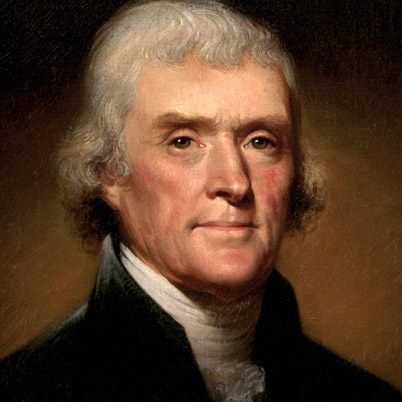
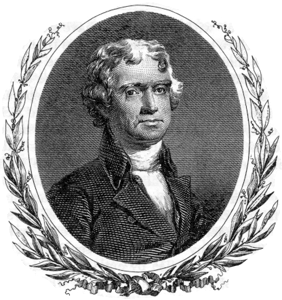
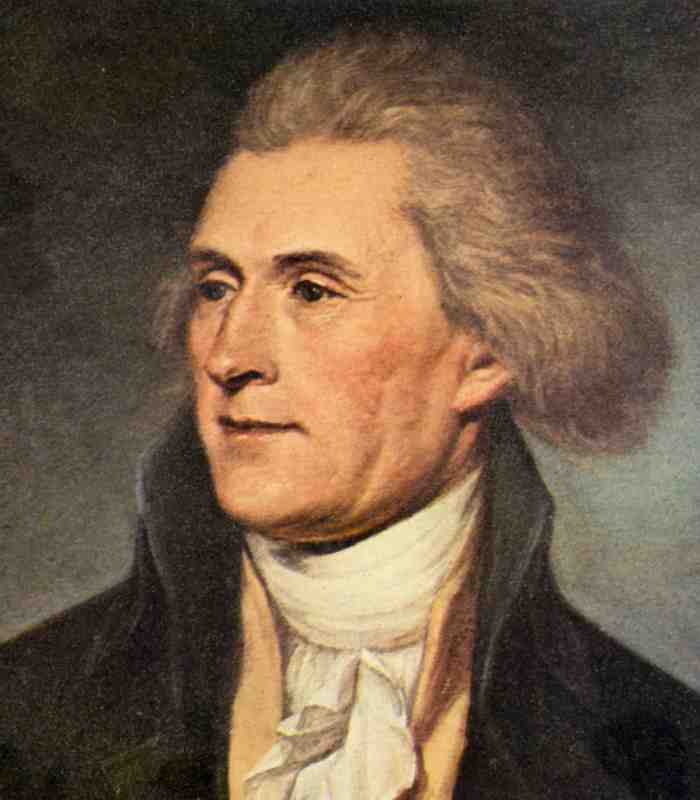
A Founding Father of the United States, Thomas Jefferson (1743-1826) was born and died in Virginia. He acted as 1st US Secretary of State, 2nd Vice President and 3rd President (1801-1809), being rated by the historians as one of the greatest ever. In his first inaugural address as President, held in Washington on 4 March 1801, he introduced the concept of “wise and frugal Government” as “necessary to close the circle of our felicities”. Read his full speech here.
Jefferson’s definition of “wise and frugal” as referred to government is as follows: “A Government, which shall restrain men from injuring one another, shall leave them otherwise free to regulate their own pursuits of industry and improvement, and shall not take from the mouth of labor the bread it has earned”. It is therefore an implicit praise to the broad self-organising capacity of the business community (which could be easily extended to civil society and the third sector), seen as the collective virtue of a great Nation.
A similar view can be retrieved in a famous quote of another President, this time of the Italian Republic, the liberal economist Luigi Einaudi, in 1960: “Thousands, millions of people work, produce and save despite all that we can invent to bother and discourage them. It is a natural vocation that drives them, not only the thirst for gain. The taste, the pride of seeing our business prosper, gain credit, inspire trust in ever wider clientele, expand plants, are a spring of progress as powerful as the gain. If not, it would be hard to explain why there are entrepreneurs who profligate all their energies and invest all their capital in their company, to collect far more modest returns than those they could safely and comfortably get by other uses” (translation is ours)
Next Pioneer: Barack Obama
Previous Pioneer: Bernard Mandeville
 The Frugal Government Newsstand