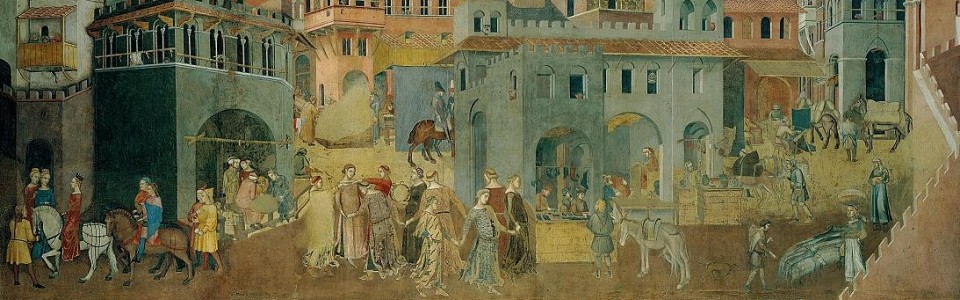
The Dutch philosopher Bernard Mandeville (Rotterdam 1670 – London 1733) is famous for a controversial political pamphlet entitled The Fable of The Bees: or, Private Vices, Public Benefits, which was published between 1705 (as a poem only) and 1714 (with an addition in prose). A second complete edition appeared in 1732. Following are pictures of the three front covers.
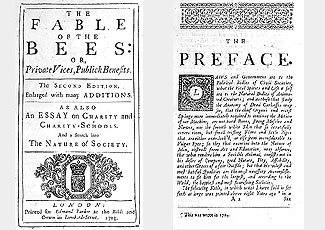
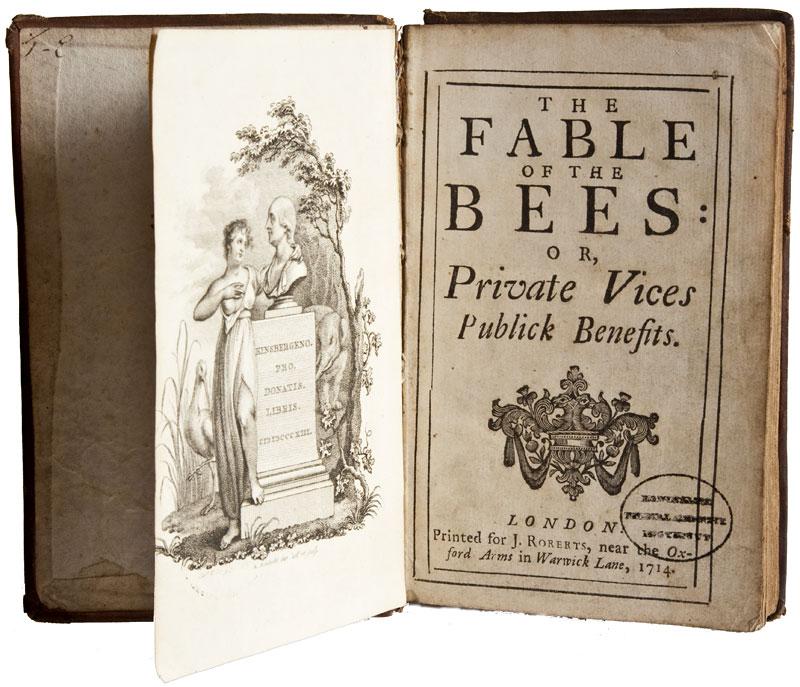
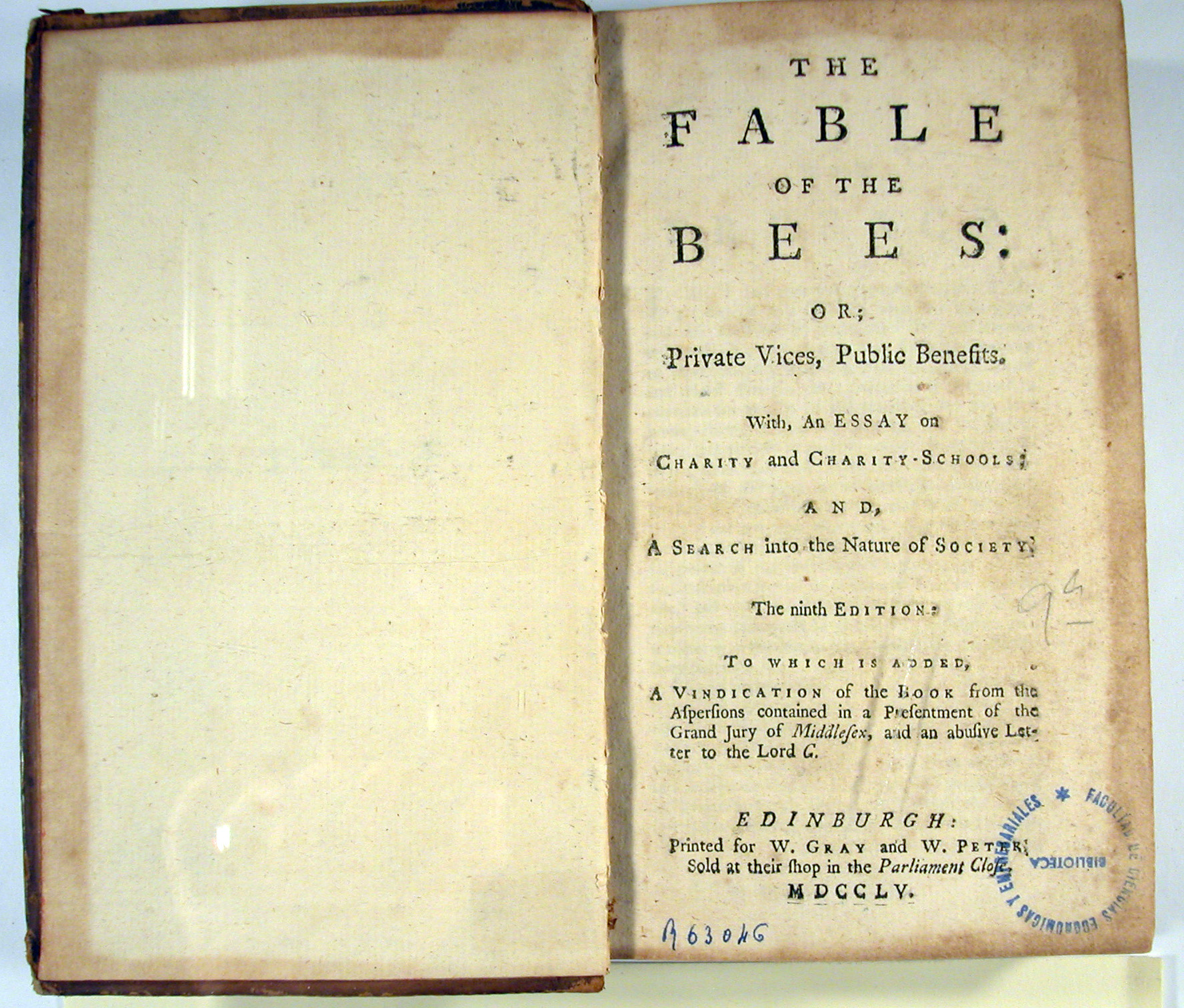
The elegy of frugality in Mandeville’s work was taken too literally – and therefore, heavily critizised at his times – as an ascetic argument (though not that far from Ambrogio Lorenzetti’s) that human desires are essentially evil and therefore produce “private vices”, while the emerging view was that collective wealth as a “public benefit” is grounded on egoism and greed (Adam Smith published The Wealth of Nations in 1776). Many contemporaries banned the book without even reading it. Other readers – especially economists, including John Maynard Keynes – focused on the controversial thesis later known as “the paradox of thrift”, which basically says that thrift, or “an insufficient propensity to consume” (in Keynesian terms), may have contrasting effects on prosperity and growth, thus implicitly blurs the border between private virtues and vices.
Overall, we could call this a Book of Theses. Among many others, one is particularly interesting, which makes reference to the purposeful frugality of the Dutch government in Mandeville’s times. This is not seen as a “virtue”, but rather as the “political wisdom” of postponing every other purchase to the need of financing worldwide sea navigation and the imports of all the merchandise that is not directly produced in the country.
Next Pioneer: Thomas Jefferson
Previous Pioneer: Ambrogio Lorenzetti
 The Frugal Government Newsstand